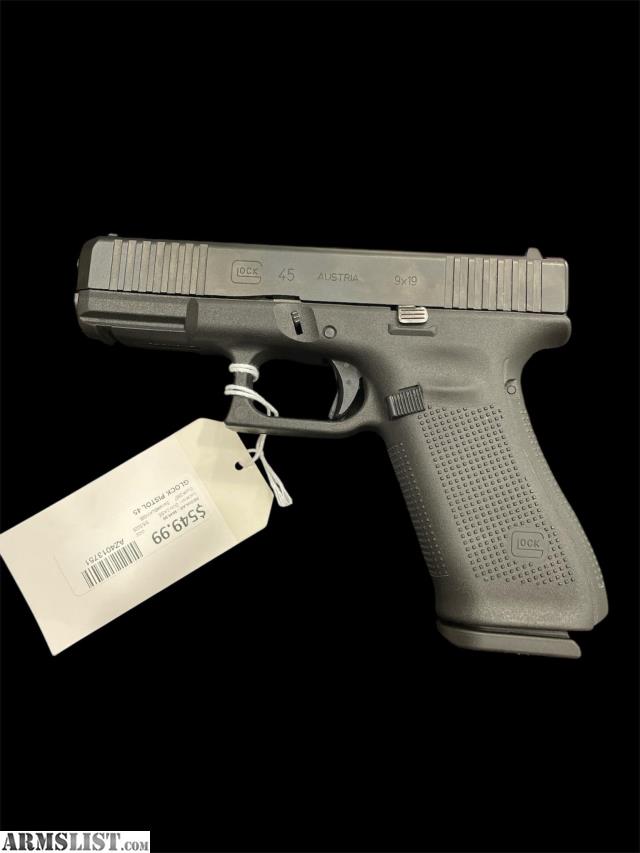
What Is the Glock Switch Ban?
On December 27, 2021, the ATF published Final Rule 2021R-08F, redefining “machinegun” to include any device “designed, made, and intended” to convert a semi-automatic firearm into a machinegun. This rule, effective 120 days later, directly targeted Glock switches, auto sears, and similar conversion devices, regardless of whether they were made of plastic, metal, or polymer. Overnight, possession of these items became a federal felony without proper registration under the National Firearms Act.
The Legal Definition of a “Machinegun” Now Includes Switches
The core of the ban hinges on a reinterpretation of the statutory definition. Prior to 2021, the legal landscape was complex, with some arguing that a standalone, unserialized switch wasn’t a “machinegun” until installed. The ATF’s new rule closed that perceived loophole. The rule states that any part or combination of parts designed and intended solely for use in converting a firearm to fire automatically is itself a machinegun. This means a Glock switch in your pocket, even if not attached to a pistol, is considered an NFA firearm. The penalty for possession of an unregistered machinegun is up to 10 years in federal prison and a $250,000 fine. This applies to all variants, whether for a Gen 3 Glock 17 or a newer Gen 5 Glock 19.
What This Means for Current Owners and the Market
For individuals who already possessed these devices before the rule’s effective date (April 26, 2022), the ATF provided a limited amnesty period to register them on a Form 1 “Application to Make and Register a Firearm.” This process required fingerprinting, a background check, and a $200 tax. That window is long closed. Today, the manufacture, sale, or transfer of new Glock switches to civilians is prohibited. The market has been driven almost entirely underground or towards manufacturers who have secured the proper Federal Firearms License (FFL) with a Special Occupational Tax (SOT) to produce and transfer registered dealer samples to qualified entities like law enforcement or military. Sites like Glockselectfire now cater exclusively to this professional, licensed market.

State Laws vs. Federal Law: A Double Jeopardy
The federal ban is just the baseline. Numerous states have enacted their own, often more severe, laws regarding machinegun conversion devices. States like California, New York, Illinois, and Washington have explicit statutes banning possession, often with mandatory minimum sentences that stack on top of potential federal charges. In these jurisdictions, you’re not just facing the ATF; you’re facing state prosecutors. For example, Illinois’ law categorizes a switch as a “machine gun” itself, carrying a Class 2 felony charge. It’s critical to understand that compliance with federal law does not guarantee compliance with state law, and vice versa. This patchwork of regulations makes legal ownership for civilians virtually impossible outside of very specific, pre-1986 transferable machineguns.
Enforcement and the Rise of “Ghost Guns”
Enforcement of the switch ban has become a top priority for the ATF and local law enforcement, frequently cited in press releases about arrests. The proliferation of cheap, 3D-printed auto sears and the sale of components on clandestine parts of the internet has blurred the lines. The ATF takes the position that a 3D-printed plastic switch, even a single-use one, meets the definition of a machinegun. Furthermore, the rule impacts “privately made firearms” (PMFs), or “ghost guns.” Installing a switch on a polymer80 frame or other unserialized pistol compounds federal violations, potentially adding charges for possession of an unregistered firearm and an unregistered machinegun. The legal risk is multiplicative.

Can I legally own a Glock switch if I have a concealed carry permit?
No. A state-issued concealed carry permit has no bearing on federal National Firearms Act (NFA) regulations. A switch is classified as a machinegun. To possess one legally, it must have been registered during the 2022 amnesty period or be a pre-1986 transferable registered machinegun—an extreme rarity for a Glock platform. Your CCW does not authorize NFA items.
What if I manufactured my own switch before the ban?
If you manufactured it before April 26, 2022, you were required to register it on an ATF Form 1 during the amnesty period to retain legal possession. If you did not, it is now an unregistered machinegun under federal law, and possession is a felony. The “I made it myself” defense is not valid under the current rule.
Are there any legal alternatives to a full-auto switch?
For civilian shooters, yes. Devices like the Fostech Echo trigger or binary triggers (where one pull fires a round and release fires another) are engineered to remain semi-automatic under the law. They are distinct from a switch or auto sear. However, their legality varies by state. They are not considered machineguns, but they are also not the same as the full-auto conversion devices sold to licensed entities by vendors like Glockselectfire.
Browse our glock switches collection
Last updated: March 27, 2026